Juniper: Salon Booking
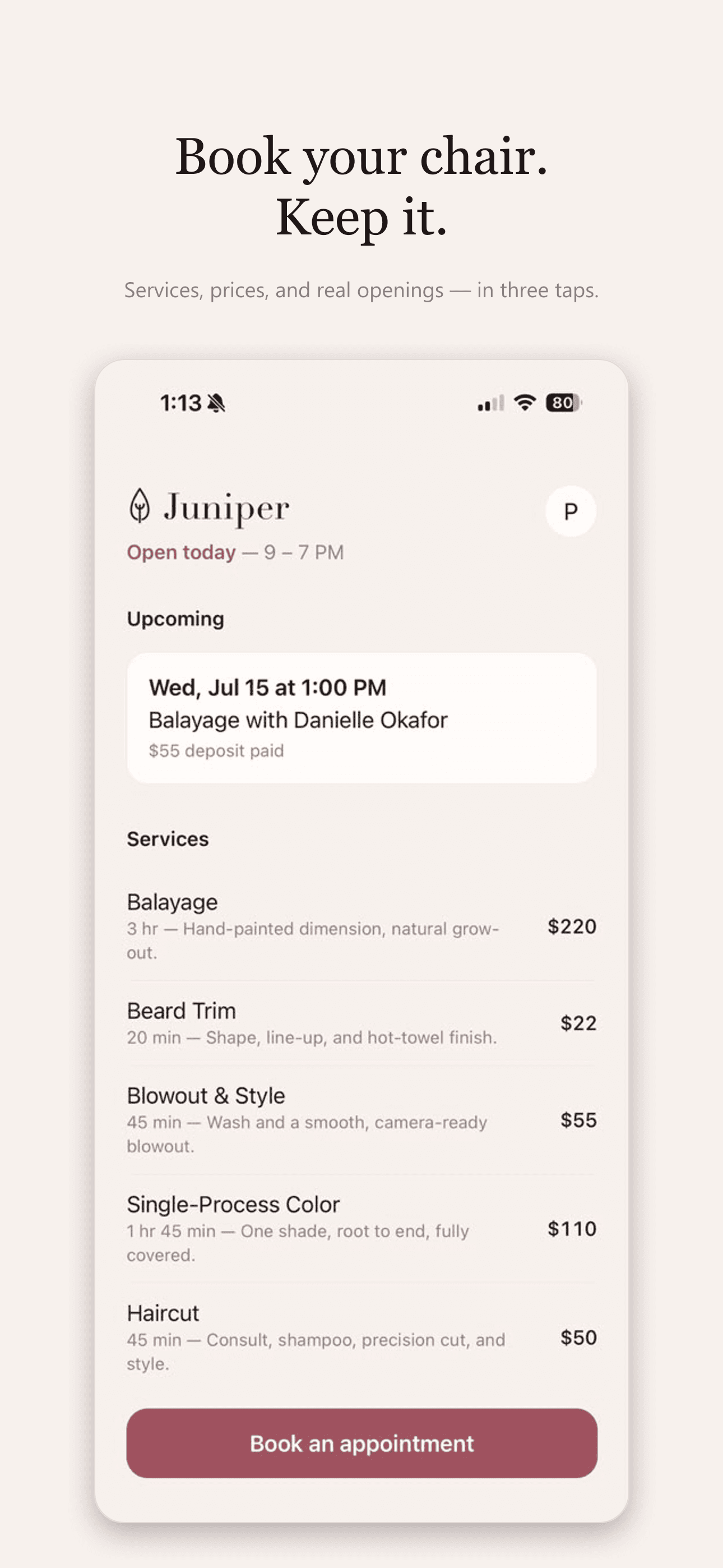
A booking app for a salon and the owner who runs it. Clients book a chair in three taps and put down a small deposit to hold it. The owner runs the whole day from a phone: the book, the money, the walk-ins, the no-shows.
Download on the App StoreA browser demo on a shared account with sample data, here to show how the app works. The finished product is a native iPhone app.
The problem.
For a salon, an empty chair is money gone, and no-shows keep taking them. Booking still happens over the phone between clients, deposits feel too awkward to ask for out loud, and the software that fixes this is built for chains: bloated, priced like it, and harder to run than the salon itself.
What we built.
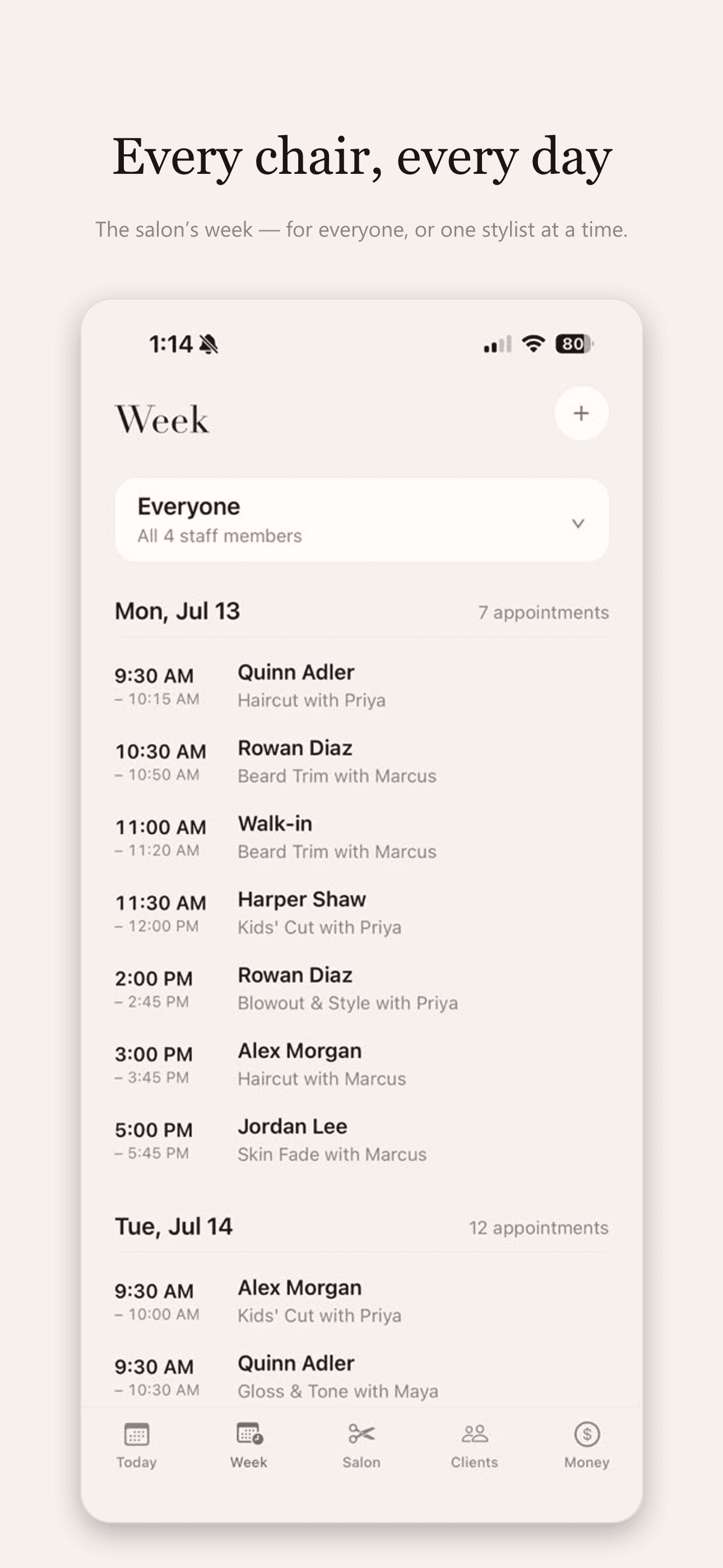
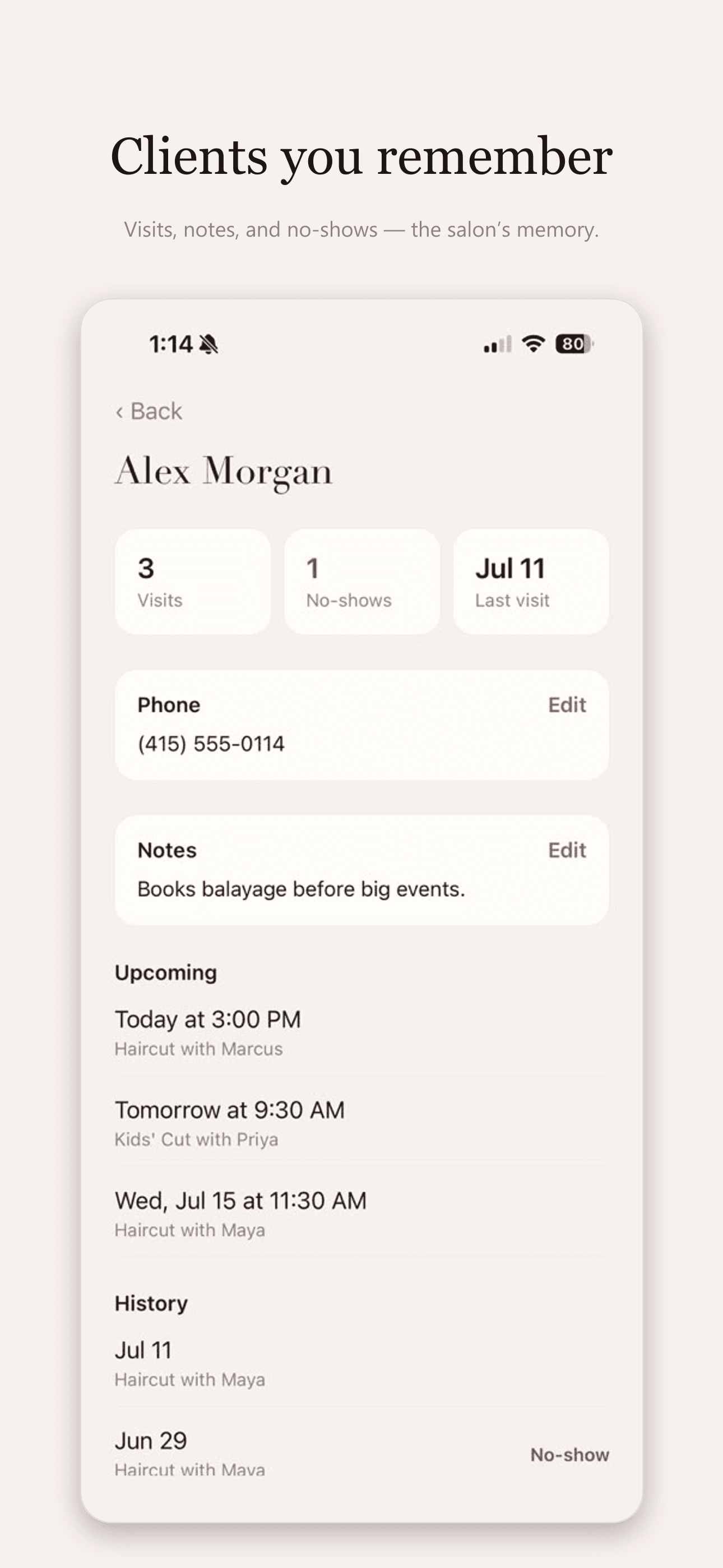
A two-sided booking app. Clients pick a service, a stylist, and a real opening, then hold the chair with a small card deposit - three taps, policy in plain sight. On the owner's side: today at a glance with deposits counted, the week for every chair, client cards that remember visits and no-shows, walk-ins added in two taps, and refunds that handle themselves when someone cancels in time.
Decisions along the way.
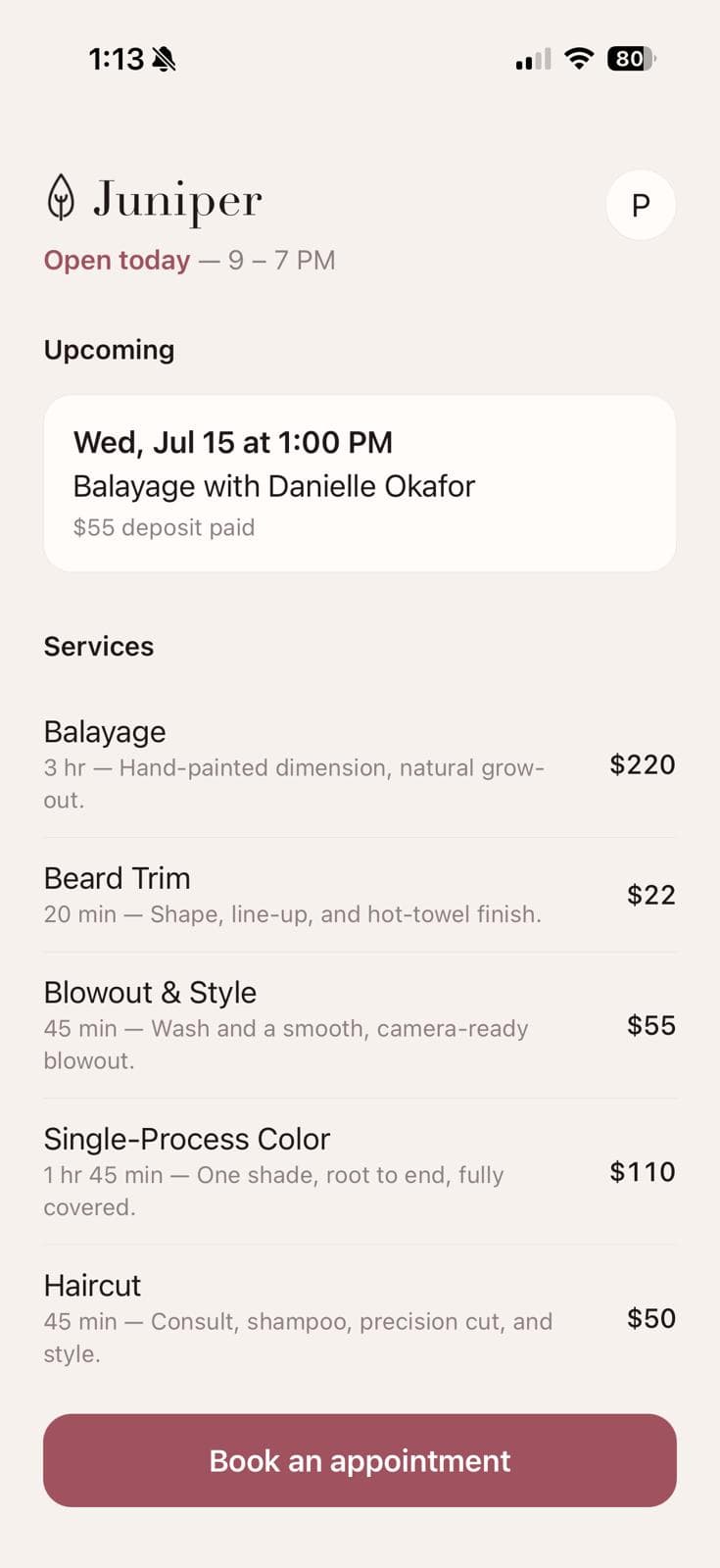
Booking is three taps, and no account.
Service, stylist, time, pay. Juniper cuts everything else - profiles, sign-ups, confirmation emails, "the salon will contact you." Any booking flow longer than the phone call it replaces loses to the phone call.
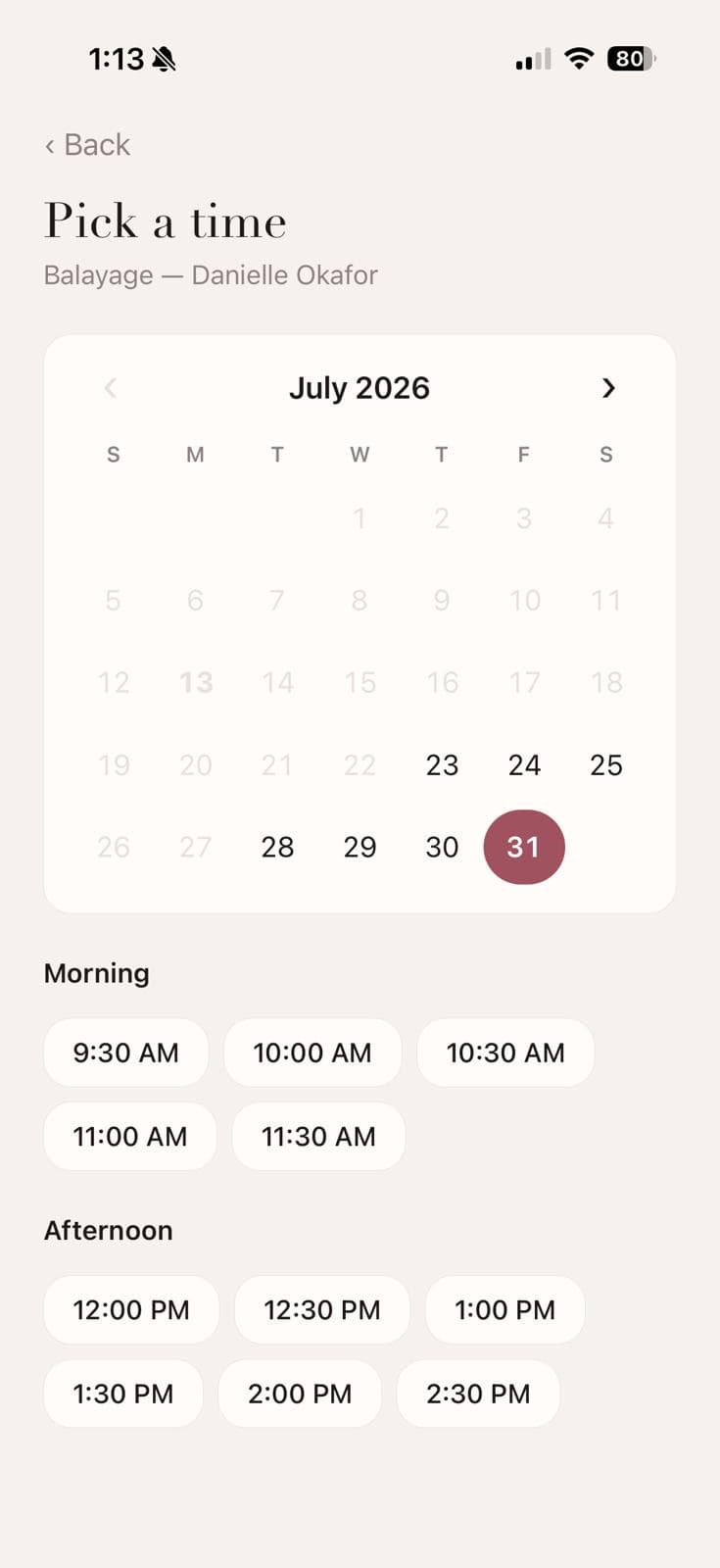
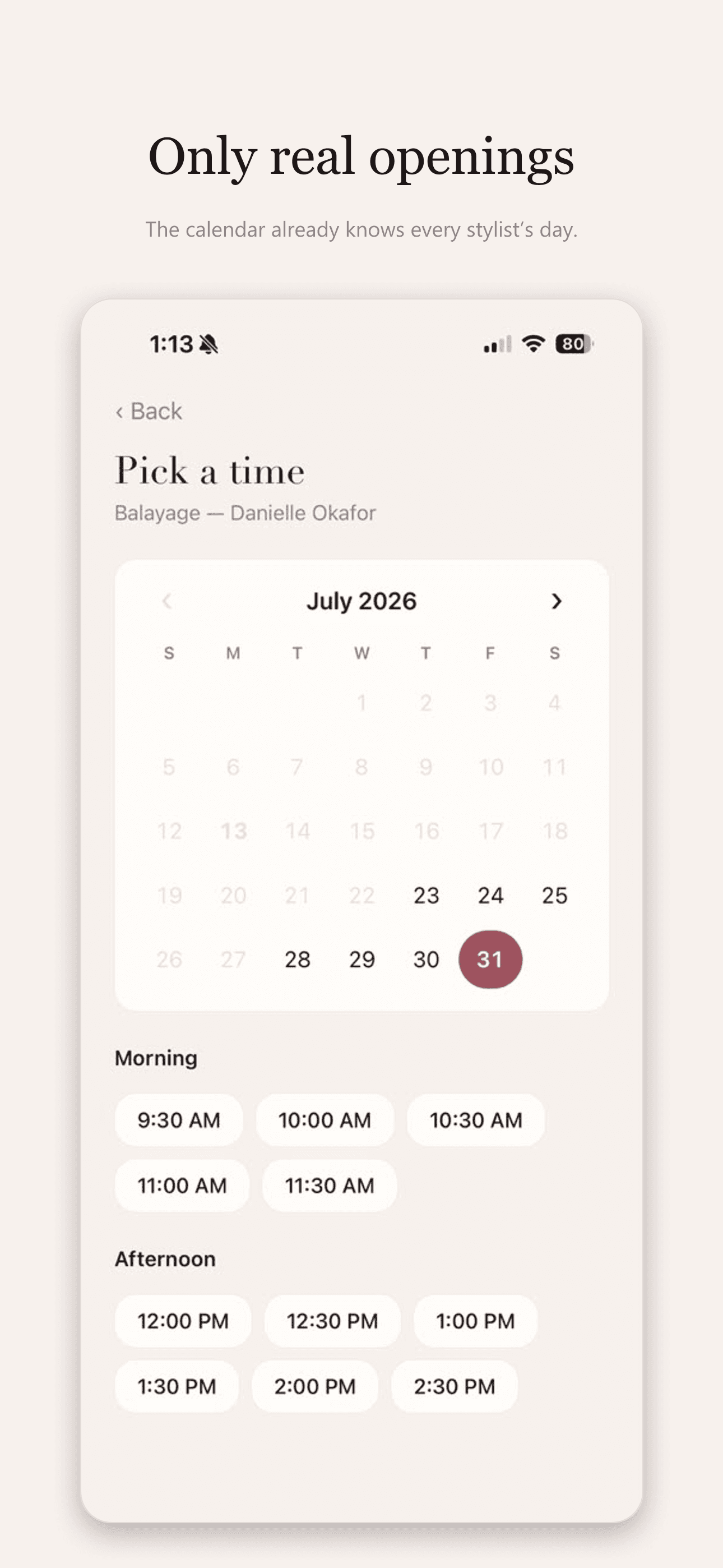
The calendar only shows real openings.
Free slots are computed from each stylist's actual hours and existing bookings, so a client can only ever pick a time that works. Juniper rejects request-and-approve on purpose: it feels safer for the salon, but it reintroduces exactly the phone tag the app exists to kill.
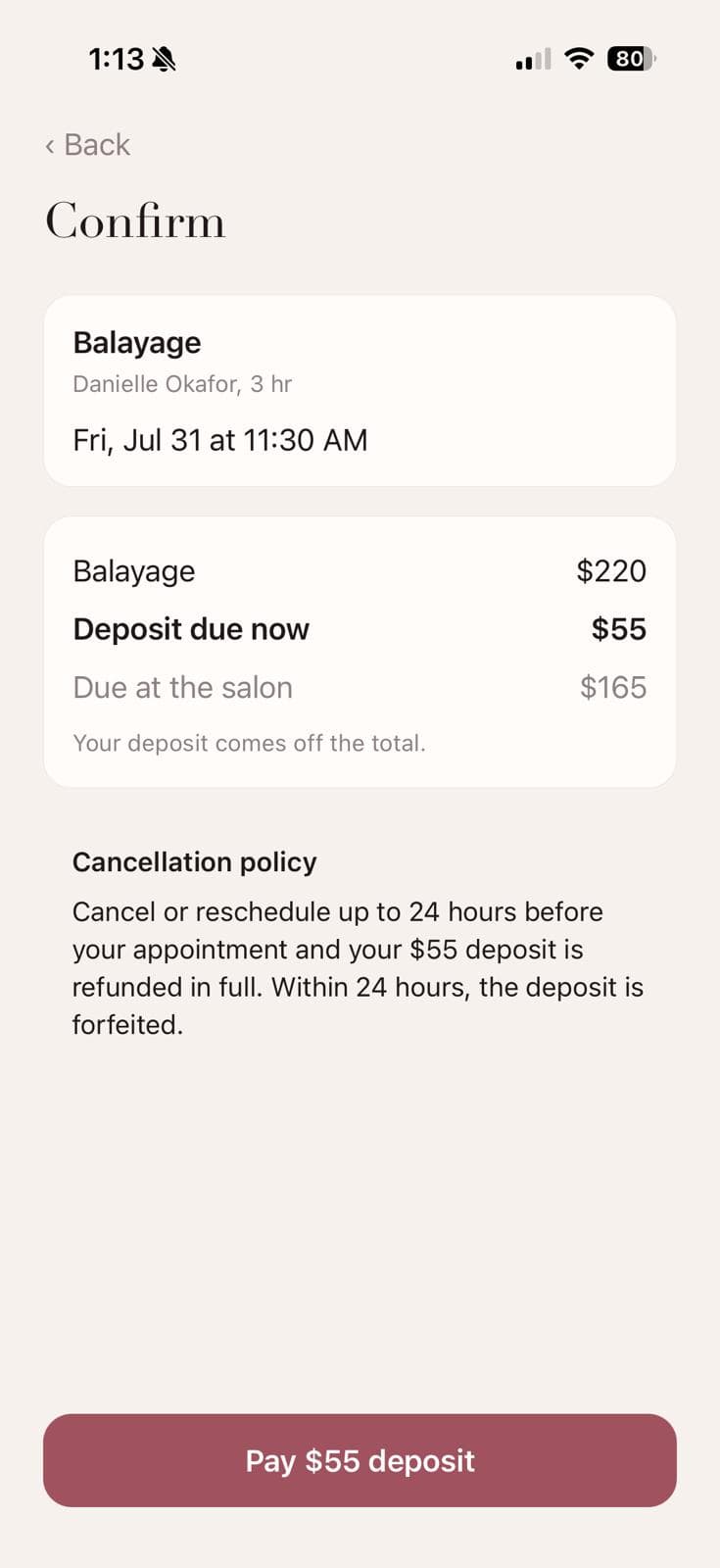
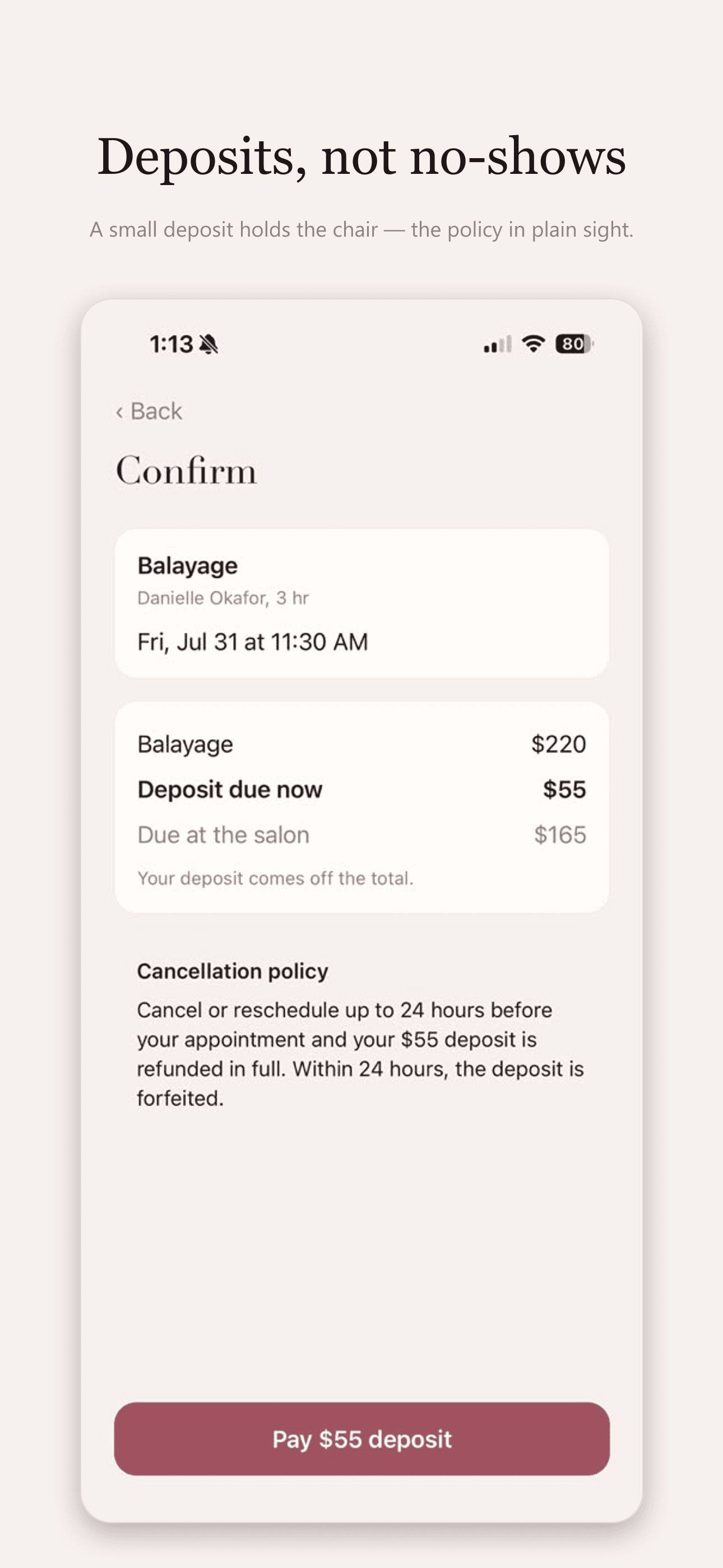
A deposit, not a card on file.
A small deposit, roughly a quarter of the service, rather than storing full card authority. Clients accept a $55 hold without flinching; asking to keep their card on file makes them close the app. No-shows stop being free either way, so Juniper is the version people actually complete. The cancellation window is stated at booking and the refund runs itself, so the owner never has to be the bad guy.
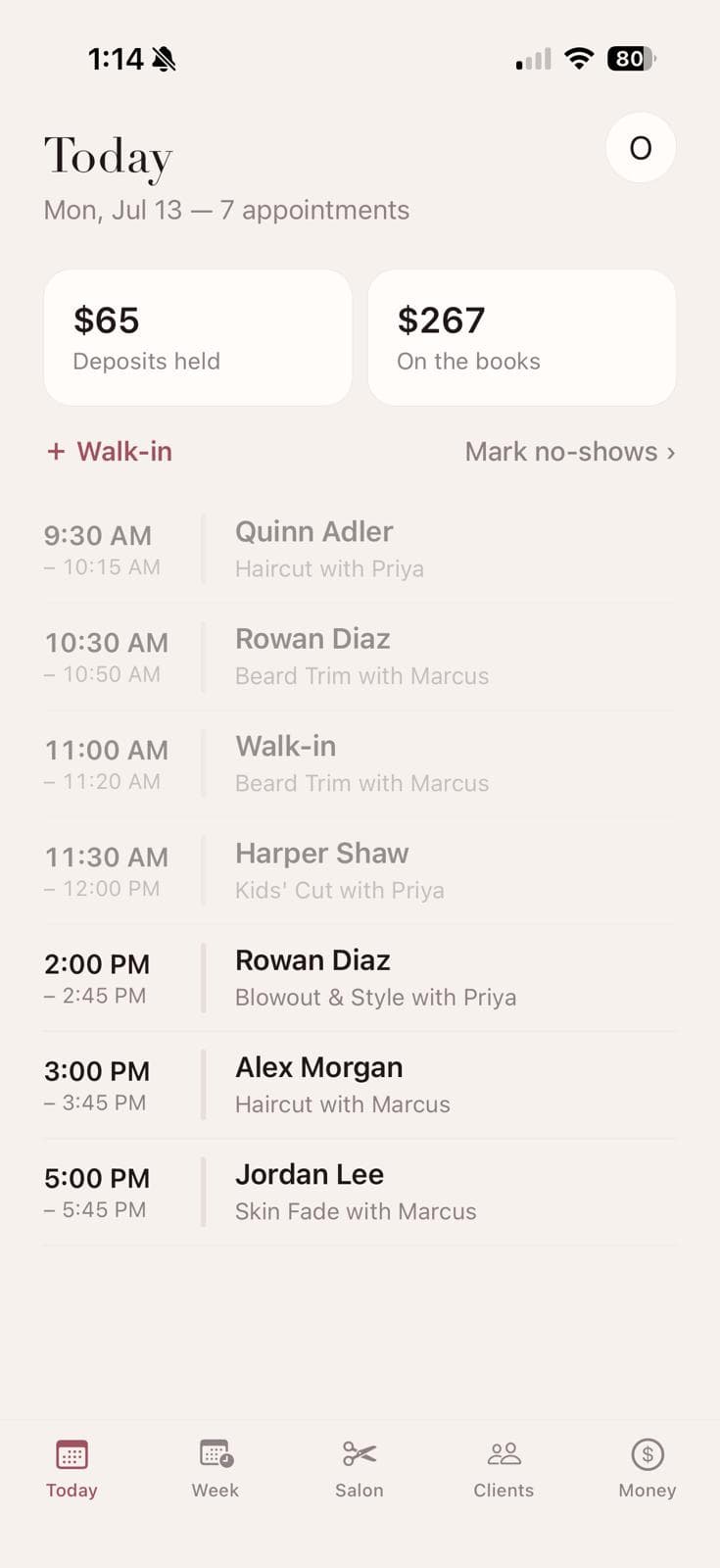
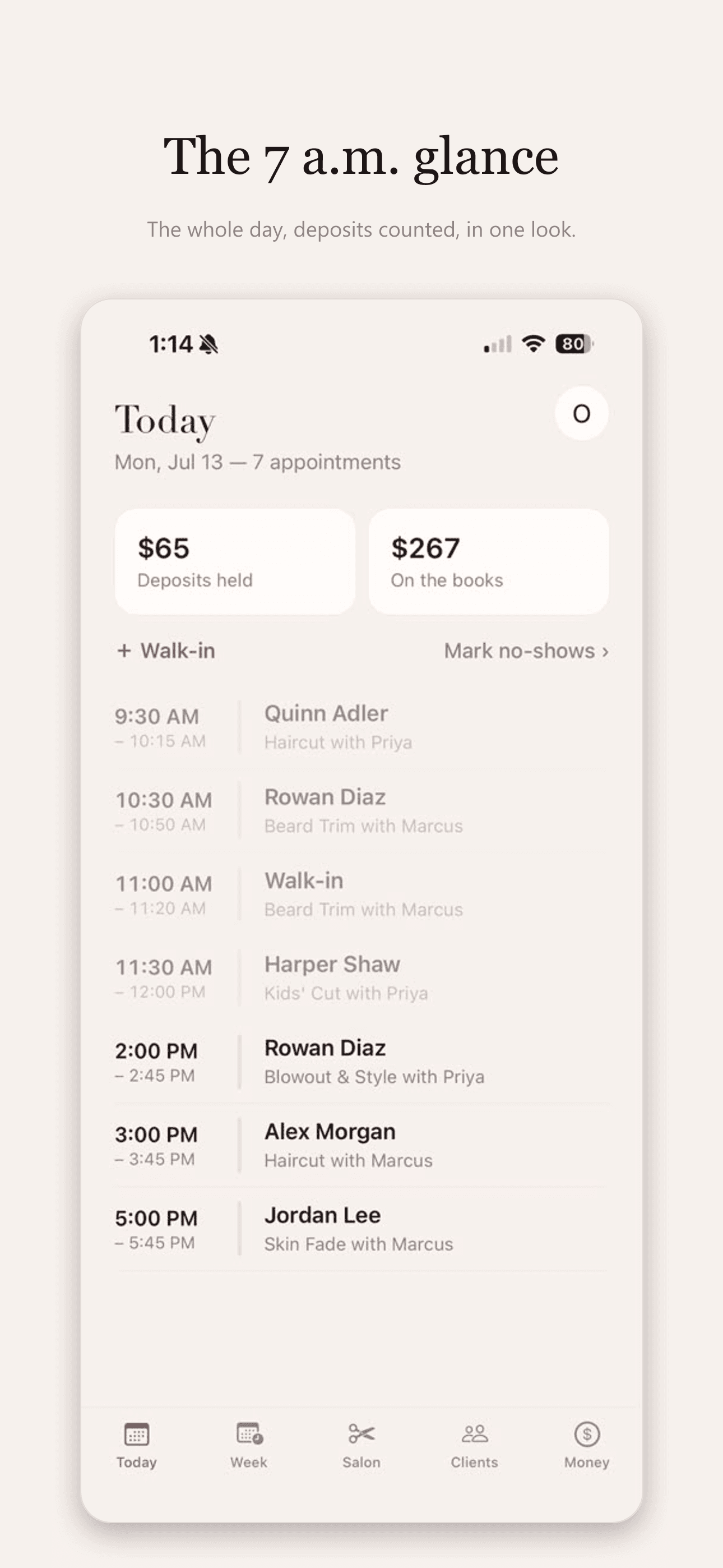
The owner's side is built for ten-second windows.
A salon owner checks their phone between clients, not at a desk. So the whole day sits on one screen with the money counted at the top, walk-ins go in with two taps, and no-shows get marked from the same list. Nothing in the owner's flow assumes two free hands or a free minute.
On the App Store.
The store listing - screens, captions, and copy - designed and shipped alongside the app.